
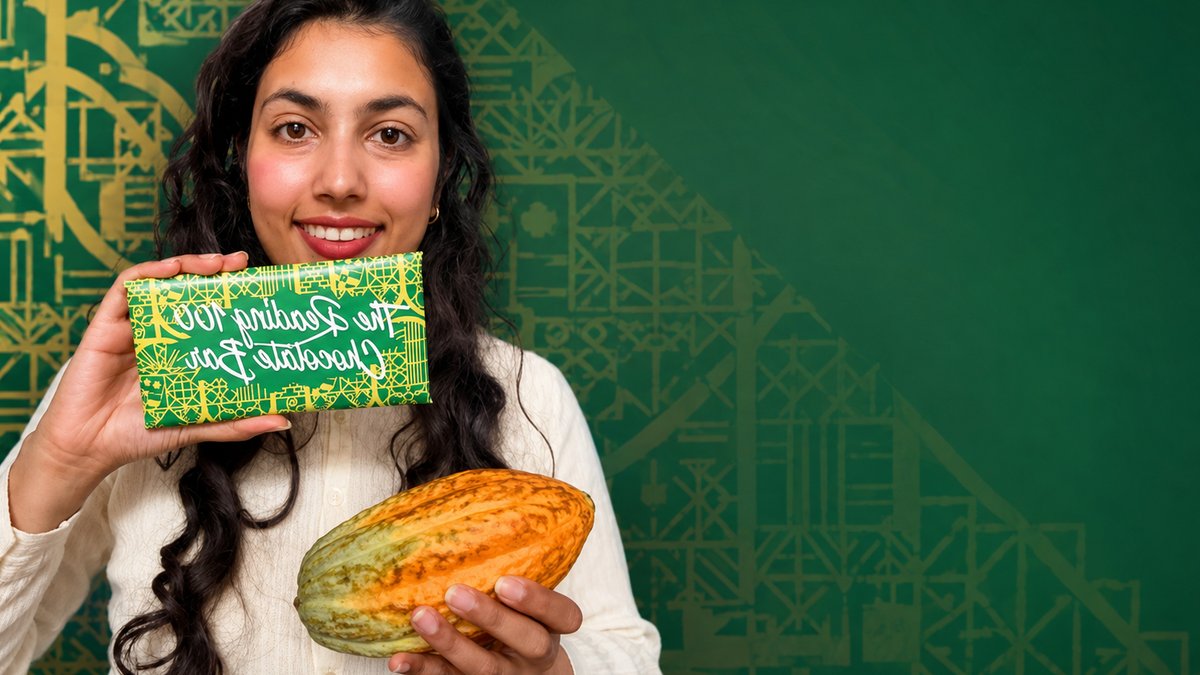
A chocolate bar made entirely from British ingredients has been created for the first time in almost a century, using cocoa grown in Berkshire.
The University of Reading has produced the ‘Reading 100 Chocolate Bar’ using UK-grown cocoa, sugar and milk to mark the institution’s centenary.
It is thought to be the first chocolate made using British-grown cocoa since 1932, when Rowntree’s produced a bar from a cocoa plant grown in a glasshouse at its York headquarters and presented it to the then six-year-old Princess Elizabeth, who later became Queen Elizabeth II.
The latest bar was created by University of Reading food security master’s student Maha Khan, who harvested, fermented and processed the cocoa beans before combining them with British milk and sugar at the university’s Department of Food and Nutritional Sciences.
Despite the novelty of locally grown cocoa, the project has been designed to highlight the vulnerability of the international supply chains underpinning Britain’s confectionery market.
The UK chocolate market is worth around £10.4bn but remains entirely dependent on imported cocoa, according to the university.
Khan said: “This British bar of chocolate highlights the precarious nature of our food supplies.
Cocoa plants are very sensitive to changes in temperature and rainfall, and climate change is already causing problems in countries that produce most of the world’s cocoa.
Protecting different cocoa varieties will become increasingly important as growers look for plants capable of coping with changing weather conditions.
Related: CMA seeks to apply supermarket land rules to Aldi and Lidl
The cocoa used for the bar was grown at the University of Reading’s International Cocoa Quarantine Centre, which houses more than 300 types of cocoa plant.
The Berkshire facility handles around 97 per cent of the international movement of cocoa plants, helping prevent pests and diseases spreading between growing regions while allowing researchers to study different varieties.
Professor Carol Wagstaff, director of AgriFood Futures at the university, said Britain’s chocolate industry depended on a supply chain stretching thousands of miles into cocoa-producing regions across Africa, South America and Asia.
Maintaining a resilient global cocoa market is essential for both the smallholder farmers supplying the industry and chocolate manufacturers and consumers in the UK.
Only six Reading 100 bars have so far been produced and there are currently no plans for a large-scale commercial launch.
Production could potentially be expanded depending on the availability of beans, although a single cocoa pod can take around six months to grow.
Khan said the finished product had a “very rich flavour”, with its cocoa drawn from plants originating from the hundreds of varieties held at Reading’s centre.
The university’s International Cocoa Quarantine Centre is a key facility for the conservation and study of cocoa varieties, and its work has important implications for the long-term sustainability of the global cocoa market.


